|
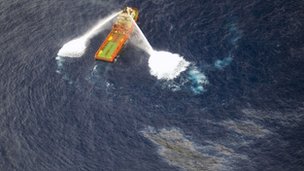
| This picture taken on May 10, 2011 shows the Vinaline Queen cargo ship anchored at Saigon port in Ho Chi Minh City. A Vietnamese cargo boat that vanished near the Philippines on Christmas Day has sunk, killing 22 of its 23 crew members, Vietnam state shipping firm Vinalines said on Friday. (AFP Photo) |
Related
articles
- Police Name 4 Suspects as Boat Tragedy Toll Nears 100
- Indonesia Searches for Bodies From Migrant Boat Disaster
- Ship Sinks Off Indonesia; 60 Missing
- Survivors Recall Horror of Indonesia Boat Disaster
- 15 More Survivors Found From E. Java Ship Sinking
Hanoi. A
Vietnamese cargo boat that vanished near the Philippines on Christmas Day has
sunk, killing 22 of its 23 crew members, Vietnam state shipping firm Vinalines
said on Friday.
“According
to our initial information, only one sailor has been rescued and the vessel has
not been found yet,” a Vinalines official based in Hanoi told AFP, asking not
to be named.
The
Vinalines Queen disappeared after passing Luzon island and apparently did not
send out a distress signal.
Late on
Friday online newspaper Dan Tri reported that the surviving sailor, Dau Ngoc
Hung, was rescued by a British ship which was heading towards Singapore.
Vinalines
said its ship was carrying more than 54,000 tonnes of nickel ore and was
travelling from Indonesia to China when it lost contact.
Vietnam
appealed to the Philippines, Taiwan and Japanese coastguards for help in
finding the vessel, but had heard nothing from the ship until now.
“We are now
focussing our efforts on searching for the Vinalines Queen,” the company
official added.
Rescue
experts quoted in the local press said emergency equipment in the vessel should
have automatically sent SOS signals to satellites and coastal rescue stations.
It is not yet clear why none was transmitted.
The
Japanese-built 190 meter Vinalines Queen was one of the largest and most modern
cargo ships in the Vietnamese fleet, with a capacity of more than 56,000
tonnes. It had been in service for Vinalines since 2005.
Vietnam
National Shipping Lines, or Vinalines, is one of the communist country’s main
state-owned enterprises.
Agence France-Presse