|
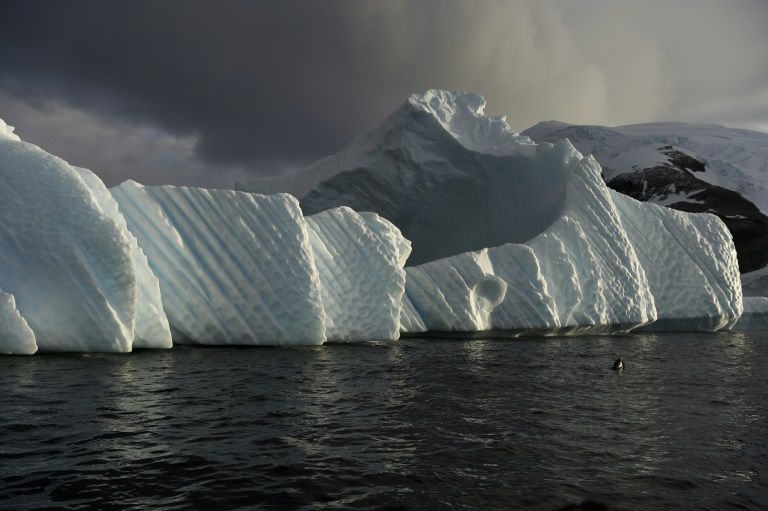
| While they're usually associated with colder-weather countries, the glaciers in Indonesia's Papua region are a key marker of the impact of rising global temperatures, researchers said (AFP Photo/Handout) |
Indonesia's
little-known glaciers are melting so fast they could disappear in a decade, a
new study says, underscoring the imminent threat posed by climate change to ice
sheets in tropical countries.
As the COP
25 summit wraps up in Madrid, nations are struggling to finalise rules for the
2015 landmark Paris climate accord, which aims to limit global temperature
rises.
Thousands
of kilometres away, glaciers on a mountain range in Indonesia's Papua region --
and a handful of others in Africa and the Peruvian Andes -- are an early
warning of what could be in store if they fail.
"Because
of the relatively low elevation of the (Papua) glaciers... these will be the
first to go," said Lonnie Thompson, one of the authors of the study
published in the Proceedings of the National Academy of Sciences this week.
"They
are the 'canaries in the coal mine'".
This
summer, Iceland mourned the passing of Okjokull, its first glacier lost to
climate change, amid warnings that some 400 others on the subarctic island risk
the same fate.
Meanwhile,
a team of researchers in Switzerland warned that unchecked greenhouse gas
emissions could see more than 90-percent of glaciers in the Alps disappear by
the end of the century.
Accelerating
melt-off from glaciers and especially ice sheets in Greenland and Antarctica
are driving sea level rises, threatening coastal megacities and small island
nations. Glaciers are also a key water source for tens of millions of people.
 |
While they're
usually associated with colder-weather countries, the glaciers in
Indonesia's
Papua region are a key marker of the impact of rising global
temperatures,
researchers said (AFP Photo/Handout)
|
Tropical
glaciers?
While
they're usually associated with colder-weather countries, the glaciers in
Papua, an Indonesian region on the western half of New Guinea island, are a key
marker of the impact of rising global temperatures, researchers said.
"Tropical
glaciers are mostly smaller and so their response time to variations in climate
change is faster compared to larger glaciers and ice sheets," said Indonesia-based
glaciologist Donaldi Permana, also an author on the study.
Earlier
estimates suggested that Papua's glaciers have shrunk by some 85 percent in the
past few decades.
This week's
study said glaciers that once covered some 20 square kilometres have shrunk to
less than half of one square kilometre. There has also been a more than
five-fold increase in the rate of ice thinning over the past few years.
"The
situation has reached worrying levels because ice formation is no longer
happening -- only glacier recession," Permana said.
"The
glaciers are in danger of disappearing within a decade or less," he added.
The melting
has been exacerbated by the El Nino phenomenon, which causes warmer
temperatures and reduced rainfall.
"Reducing
greenhouse gas emissions and planting more trees can probably slow down the ice
recession in Papua," Permana said.
"However,
we believe it'll be extremely difficult to keep them" from melting.
Aside from
any environmental impact, their disappearance would also be a cultural loss for
some indigenous Papuans who consider them sacred.
"The
mountains and valleys are the arms and legs of their god and the glaciers are
the head," said Thompson, a professor at Ohio State University.
"The
head of their god will soon disappear."