Google – AFP, 1 Sep 2013
 |
A worker
packs shark fins in a plastic containeer at a processing
factory in Japan on
March 12, 2013 (AFP/File, Toshifumi Kitamura)
|
MAJURO,
Marshall Islands — Conservationists have attributed a dwindling demand for
shark fins to China's crackdown on corruption which has forced a decline in
lavish banquets.
"We
are seeing a reduction in demand from China. Hong Kong is also showing a
significant decline in consumption," Angelo Villagomez, a shark specialist
with US-based conservation group the Pew Charitable Trusts, said Sunday.
Villagomez
was in the Marshall Islands to discuss shark sanctuaries with leaders at the
Pacific Islands Forum, the annual summit of Pacific heads of state.
However, he
said the decline in shark fin demand over the past year was not directly linked
to increasing shark protection by Pacific island governments.
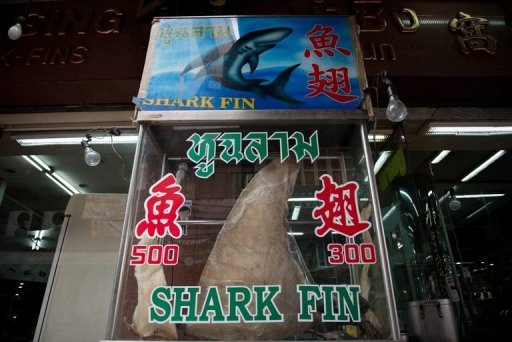 |
A shark fin
is displayed infront of a
restaurant in the Chinatown area of
Bangkok on March
6, 2013 (AFP/File,
Nicolas Asfouri)
|
"It's
not to do with conservation. It's related to a Chinese government anti-graft
crackdown, which has cut back on dinners where shark fin soup was featured on
the menu," Villagomez said.
"The
culture is (also) changing in Asia among younger people. They aren't eating
shark fin soup as much."
Historically,
high demand in the Asian market has fuelled shark-finning by fishermen on
commercial tuna vessels in the Pacific.
But finning
is slowly being shut down as the number of islands legislating shark
sanctuaries grows.
Villagomez
will be meeting this week with Pacific leaders to discuss extending the number
of shark sanctuaries.
"The
Pacific is leading the world in shark conservation," he said.
"Pew
is working with islands that have sanctuaries on enforcement, implementing best
practices, and conducting research."
The nearly
300 purse seine fishing boats now plying tuna grounds in the Pacific are
required to have independent observers on board and with "100 percent
observer coverage, enforcement of shark bans is as good as it will get,"
Villagomez added.
"The
islands now have eyes on the water and in the ports."
Since
banning shark fishing in its waters in 2011, the Marshall Islands has arrested
two foreign vessels for having shark fins on board and fined them more than
$100,000.
"During
the next two years, our goal is to create a united Pacific front on
sharks," Villagomez said.
No comments:
Post a Comment
Note: Only a member of this blog may post a comment.