 |
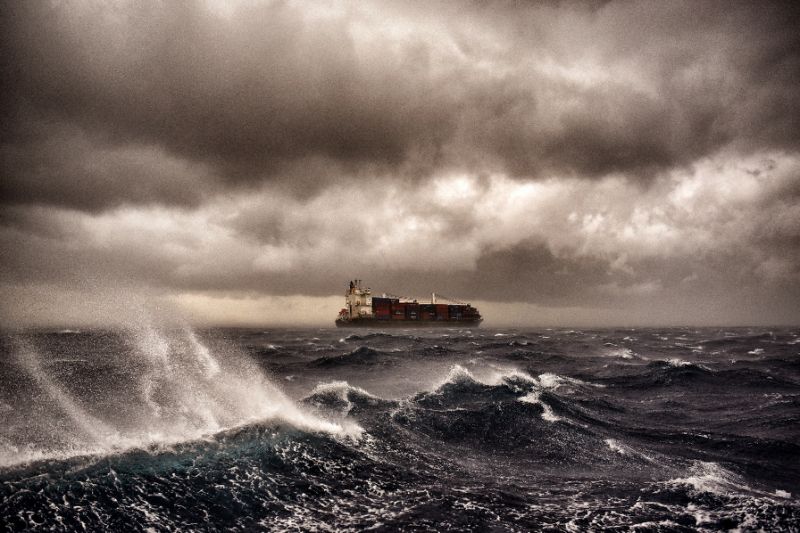
| Shipping and aviation are two sectors that were not covered by the United Nations climate agreement, a deal struck in Paris in 2015 to cap global warming at "well under" 2.0 degrees Celsius by the end of this century (AFP Photo/ARIS MESSINIS) |
London (United
Kingdom) (AFP) - Members of the UN International Maritime Organisation on
Friday struck a deal to halve carbon dioxide emissions from shipping by 2050 in
a deal that will force the industry to redesign fleets.
"The
initial strategy envisages for the first time a reduction in total GHG
(Greenhouse Gas) emissions by at least 50 percent by 2050 compared to
2008," the IMO said in a statement.
Major
shipping nations such as Saudi Arabia and the United States had objected to
earlier drafts in two weeks of discussion at the 173-member organisation based
in London.
Some
countries such as the Marshall Islands, which are at risk of rising seas but
are also a major flag state, had wanted a stronger commitment and the EU wanted
a 70 to 100 percent cut.
But the
agreement was widely hailed by stakeholders.
"This
is a ground-breaking agreement -- a Paris agreement for shipping -- that sets a
very high level of ambition for the future reduction of carbon dioxide
emissions," the International Chamber for Shipping's secretary general
Peter Hinchliffe said.
 |
Some countries
like Marshall Islands, which has endured worsening storm surges
due to global
warming, are at a higher risk of rising seas and wanted a stronger
committment
to reduce carbon dioxide emssions (AFP Photo/GIFF JOHNSON)
|
"We
are confident this will give the shipping industry the clear signal it needs to
get on with the job of developing zero carbon dioxide fuels so that the entire
sector will be in a position to decarbonise completely," he said.
'Watershed moment'
Marshall
Islands President Hilda Heine also praised the deal.
"Today
the IMO has made history. While it may not be enough to give my country the
certainty it wanted, it makes it clear that international shipping will now
urgently reduce emissions and play its part in giving my country a pathway to
survival," she said in a statement.
Maersk, the
world's largest container shipping company, tweeted: "We were pushing for
stronger targets but still a great step that IMO seeks to halve the shipping
sector's greenhouse gases by 2050".
Shipping
and aviation are two sectors that were not covered by the United Nations
climate agreement, a deal struck in Paris in 2015 to cap global warming at
"well under" 2.0 degrees Celsius by the end of this century.
 |
Marshall
Islands President Hilda Heine said the deal gives her "country a pathway
to survival" even if it " may not be enough to give my country the
certainty it
wanted" (AFP Photo/FREDERICK FLORIN)
|
The
aviation sector reached an emissions plan two years ago but shipping has taken
longer because its reliance on long-distance ships that run on bunker fuel
makes it harder to cut carbon.
Shipping
accounts for around 2.0 percent of global carbon emissions and that share could
rise to around 15 percent if left unchecked, according to the World Bank.
The Climate
Action Network said Friday's deal was "a welcome first step".
Some
environmental groups have warned that a 50 percent cut may not be enough to
keep global warming below 2.0 degrees Celsius.
Britain's
Shipping Minister Nusrat Ghani said the deal was a "watershed
moment".
"We
will work with fellow member states to ensure the shipping industry makes the
transition to zero emissions ships as quickly as possible," she said.
Related Articles:
No comments:
Post a Comment
Note: Only a member of this blog may post a comment.